In the Spotlight
Our Impact
Explore how the CEC’s work over the years has delivered tangible environmental and social outcomes across North America — from scientific studies that guided environmental standards, regulations and policies in Canada, Mexico and the United-States, to trinational conservation strategies, community grants and geospatial mapping projects. Whether you’re a policymaker, conservation expert, researcher or simply interested in North American environmental cooperation, this page offers a comprehensive overview of not only what the CEC has achieved — but how and why those efforts have unfolded.
Topics
Climate Change
Supporting emissions reduction and helping communities adapt to extreme weather events
Environmental Justice
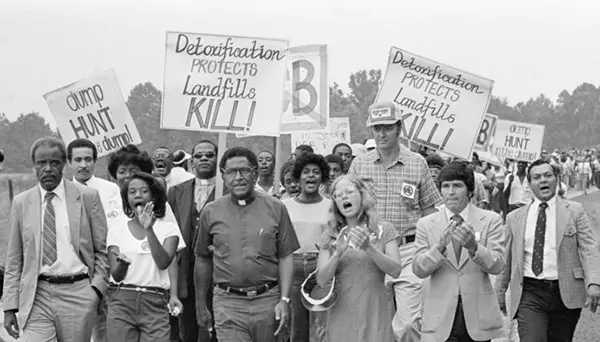
The pursuit of environmental justice (EJ) aims to address historical inequities, marginalization and discrimination in how environmental benefits and burdens are enjoyed or suffered by certain communities.
Ecosystems
Working with communities to conserve and restore North America's terrestrial and marine ecosystems and priority species
Enforcement
Supporting enforcement and compliance with domestic environmental law and with multilateral environmental agreements
Sustainable Living and Economies
Advancing the sustainability of our economic activities and life choices by identifying and fostering alternatives that effectively integrate the environmental, social and economic dimensions for a just and resilient North America. Our work is organized around four main areas:
Pollutants
Promoting clean air, water and land through prevention, reductions, and sound management of pollutant releases, toxic chemicals and hazardous waste
Youth Engagement
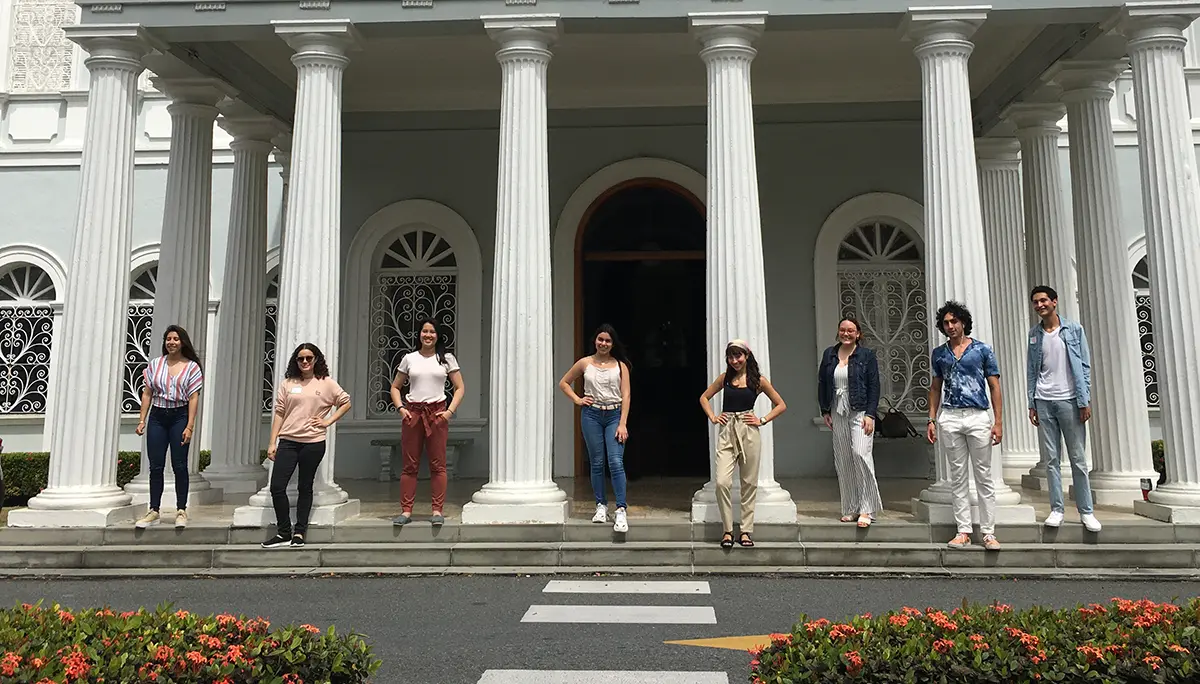
Over the years, the CEC has been committed to youth engagement and the efforts supported have provided youth with opportunities to raise awareness, provide tangible, sustainable, and innovative solutions for environmental issues in their communities, and influence CEC’s strategies, projects, and initiatives.
Indigenous Affairs
The Commission for Environmental Cooperation (CEC) recognizes the essential role that Indigenous Peoples and local communities play in environmental stewardship across Turtle Island, Madre Tierra, also known as North America.
Private Sector Engagement
The private sector plays a critical role in driving economic prosperity, innovation and sustainable development.
Featured Project
Fast Mitigation Strategies for Short-Lived Climate Pollutants
2024 Active SubTopic
Featured Publication
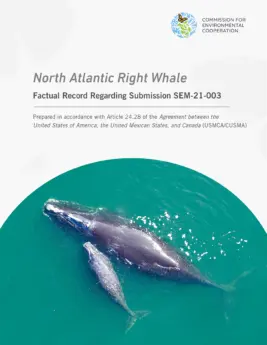
Hydraulic Fracturing in Nuevo Leon
Factual Record Regarding Submission SEM-18-003
November 18, 2024 100 pages Enforcement
According to the Submitters, the Party is failing to effectively enforce Article 28 of the General Ecological Balance and Environmental Protection Act (Ley General del Equilibrio Ecológico y la Protección al Ambiente— LGEEPA) with respect to the obligation to file an environmental impact statement (EIS); LGEEPA Article 15, concerning the obligation to repair harm arising from work that affects the environment; LGEEPA Article 122, applicable to control of wastewater; LGEEPA Article 170, which authorizes the Ministry of the Environment and Natural Resources (Secretaría de Medio Ambiente y Recursos Naturales—Semarnat) to impose safety measures; LGEEPA Articles 1, 15, and 88, in relation to sustainable water use; Articles 7 and 10 of the Federal Environmental Liability Act (Ley Federal de Responsabilidad Ambiental—LFRA), in regard to the liability of Petróleos Mexicanos (Pemex) for environmental harms; Articles 2 and 91 of the Regulation to the General Waste Prevention and Integrated Management Act (Reglamento de la Ley General de Prevención y Gestión Integral de Residuos—LGPGIR Regulation), in regard to wastewater discharges into geologically stable formations, and Articles 8, 16, and 18 of the Guidelines for the protection and conservation of national waters during hydrocarbon exploration and extraction in unconventional reservoirs (Lineamientos para la protección y conservación de las aguas nacionales en actividades de exploración y extracción de hidrocarburos en yacimientos no convencionales— “Guidelines for Water Conservation-UR”), applicable to the prevention of subsoil and aquifer contamination.
What We Do
We conduct research, provide tools and training, and provide a unique space for decision-makers and the public to engage on environmental policy issues affecting the North American region.